
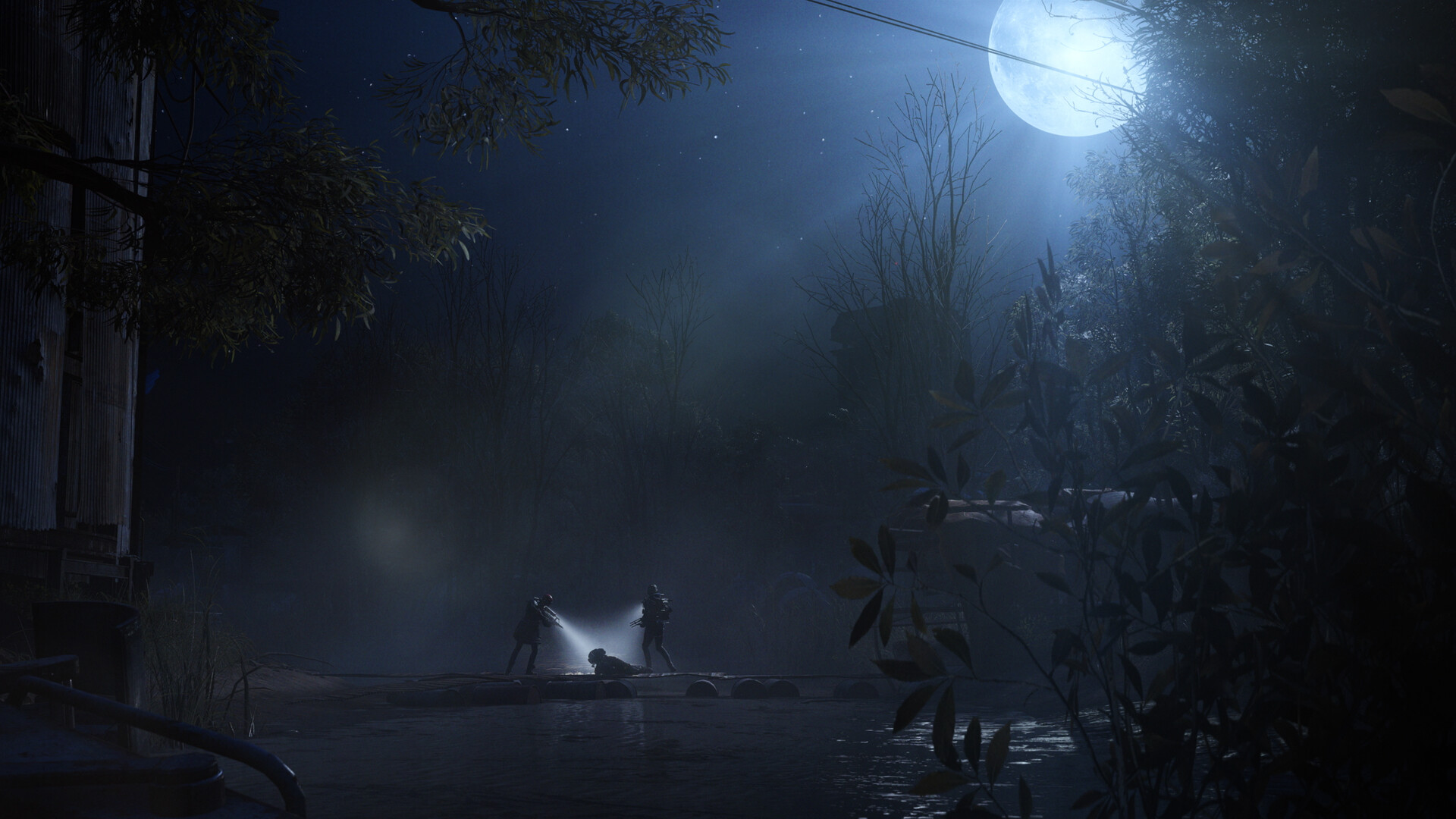
Extraction is the only part of a raid that cannot be skipped, which makes it the part where a raid is most often lost. The awkward truth is that most extraction deaths are not caused by the extraction itself. They are caused by arriving at a known location early enough to be watched, and then staying there because leaving feels like giving up.
The extraction is a location, not a state
An extraction point is a fixed place on a map that every other player can also find. Holding it is not a strategy, because holding it means occupying the one spot where anyone who wants to leave has to come. The practical consequence is that time spent at an extraction is time spent being the most predictable thing on the map.
The alternative is to treat the extraction as a timed appointment. You arrive close to when the extraction is available, from an angle that is not the obvious approach, and you leave. The minutes you save by not waiting are minutes you spend not being a target.
What 2.1.0 changed
The 2.1.0 store update fixed a specific and memorable way to lose a raid: players could be eliminated despite being inside the Gondola and extracting. That fix matters, and it matters more than it sounds like it should, because it removes a failure mode that taught players to distrust the extraction itself.
The same update fixed a traversal spot in the Railyard on Pendola Pass where you could not jump up or auto-step up as expected. Both fixes share a property: they remove a place where a raider dies to something that is not another player and not a machine, but geometry. Those deaths are the worst kind, because there is no lesson in them.
What the fixes do not change is the strategic problem. The gondola is still visible, still approachable from several angles, and still the place where a third party will expect you to be. Fixing the geometry removed the unfair version of the death; it left the fair version in place.
Commit or leave, not both
The failure state at an extraction is indecision. A raider who commits and extracts succeeds; a raider who commits and dies loses a kit; a raider who leaves and re-routes loses time. The raider who hovers — approaching, backing off, approaching again — loses all three, because they spend the raid time and still end up predictable.
A workable rule is to decide the extraction before you are within sight of it. If the plan is to take this one, take it, and arrive with enough time to clear the immediate area rather than sprinting into it. If the plan is not to take it, do not go near it, and pick the second extraction while you still have distance to spend.
When the pack changes the answer
The decision is not purely tactical; the pack is part of it. A raider carrying nothing of value should take risks that a raider carrying the quest item should not. This is why dumping weight before the final approach is often correct even when the discarded items have a sale price — you are buying a better decision at the end, and the end is where decisions are most expensive.
The third-party problem
Most contested extractions are contested by someone who was not fighting you. They arrived, they saw an extraction happening, and they waited. There is no fix for this, but there is a mitigation: extract on a timer rather than on an instinct. If you know the extraction takes a fixed time to complete, the correct plan is to be the one arriving at the last responsible moment, not the one already standing there.
And if a fight starts at the extraction, the extraction is no longer the objective. The objective becomes breaking line of sight long enough to re-approach from somewhere else. Committing to a gunfight while standing in the most predictable spot on the map is how a successful raid becomes a lost kit in the last forty seconds.
The habit
Before the launch, name the extraction. During the raid, when the objective is complete, move toward that extraction and only revise if the route is physically blocked. The habit is not about discipline for its own sake: it is that a planned extraction lets you spend attention on the last hundred metres instead of spending it on choosing.